How Buildings Learn by Stewart BRand
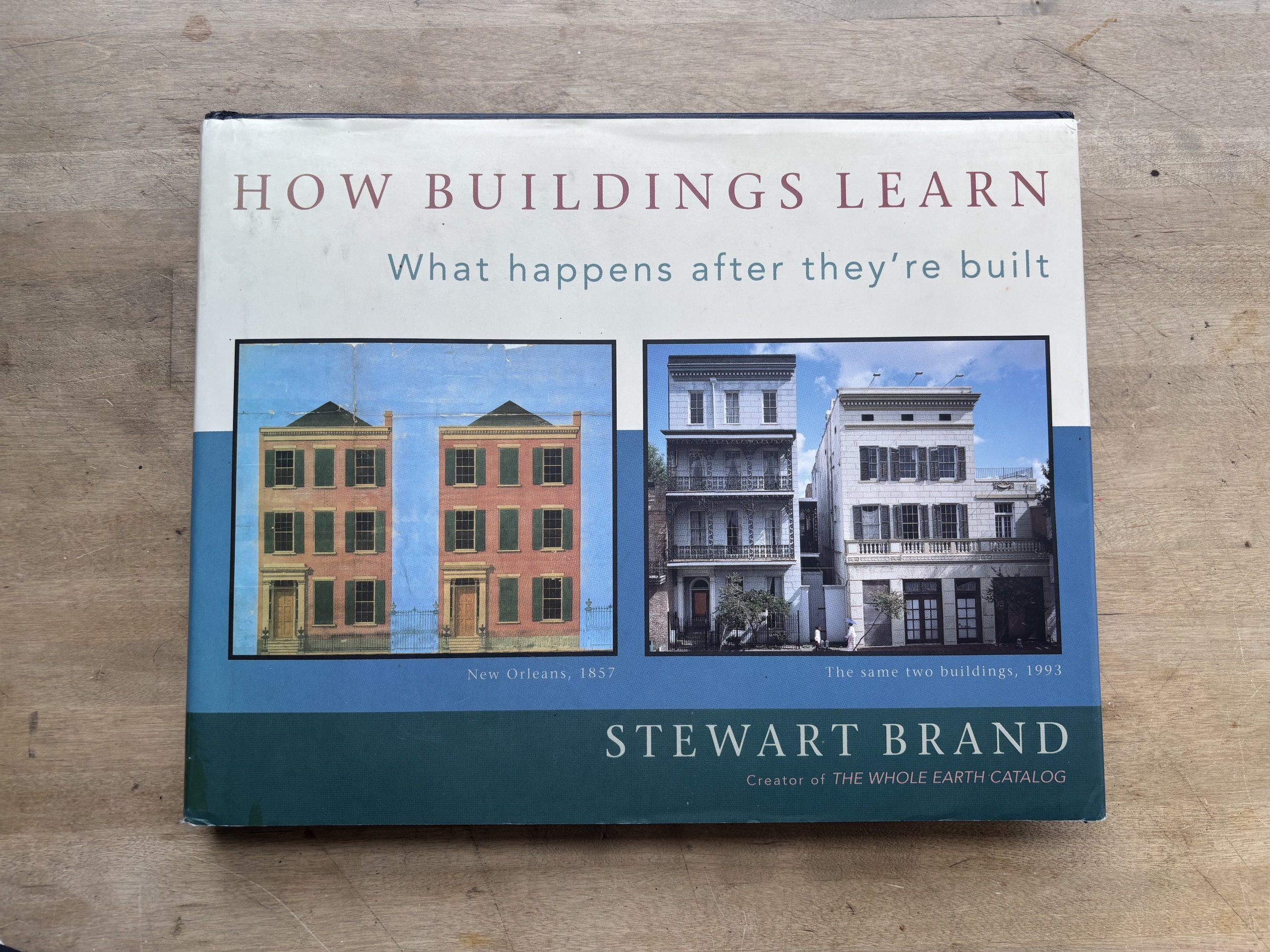
“A more radical monetary strategy is to attack the whole idea of a mortgage and its constant bleeding of money away from building upkeep. Sixty percent of the final cost of a mortgaged building disappears as interest to the bank instead of going into the building. What if the usual down-payment money were spent instead to complete a small core building or a large but rudimentary building? Then the usual interest money, instead of going away to the bank, would go into prolonged, attentive growth and improvement of the original building. Contractor Matisse Enzer, who promotes this idea, estimates he could build a minimal but livable ‘continual house’ for the standard down payment and then be paid the usual rate of interest to grow the house bit by bit over the following years. ‘With ten or twelve projects like that going on, I could make a good living.’ The owner gives up some tax advantages but gains freedom from bondage to the bank and eventually gets more house—and a far more highly adapted house—for the same money as a mortgaged monster.”
&
“We need to switch from the hotel-room aesthetic to the mountain-hut aesthetic about the accumulation of information. A hotel room is constantly scoured of any trace of previous use and is presented daily as if brand-new. Mountain huts are exuberant museums of their own past, with each hiker adding comments to the guest book, initials and dates to the woodwork, and food to the larder. What if every commercial building had an on-site journal and maintenance log, which the landlord could not legally remove or amend? What if city halls provided a repository for the full records of every house in town—not just the legal and title records, but photos and memorabilia voluntarily left by successive generations of tenants.”
-Stewart Brand, 1994