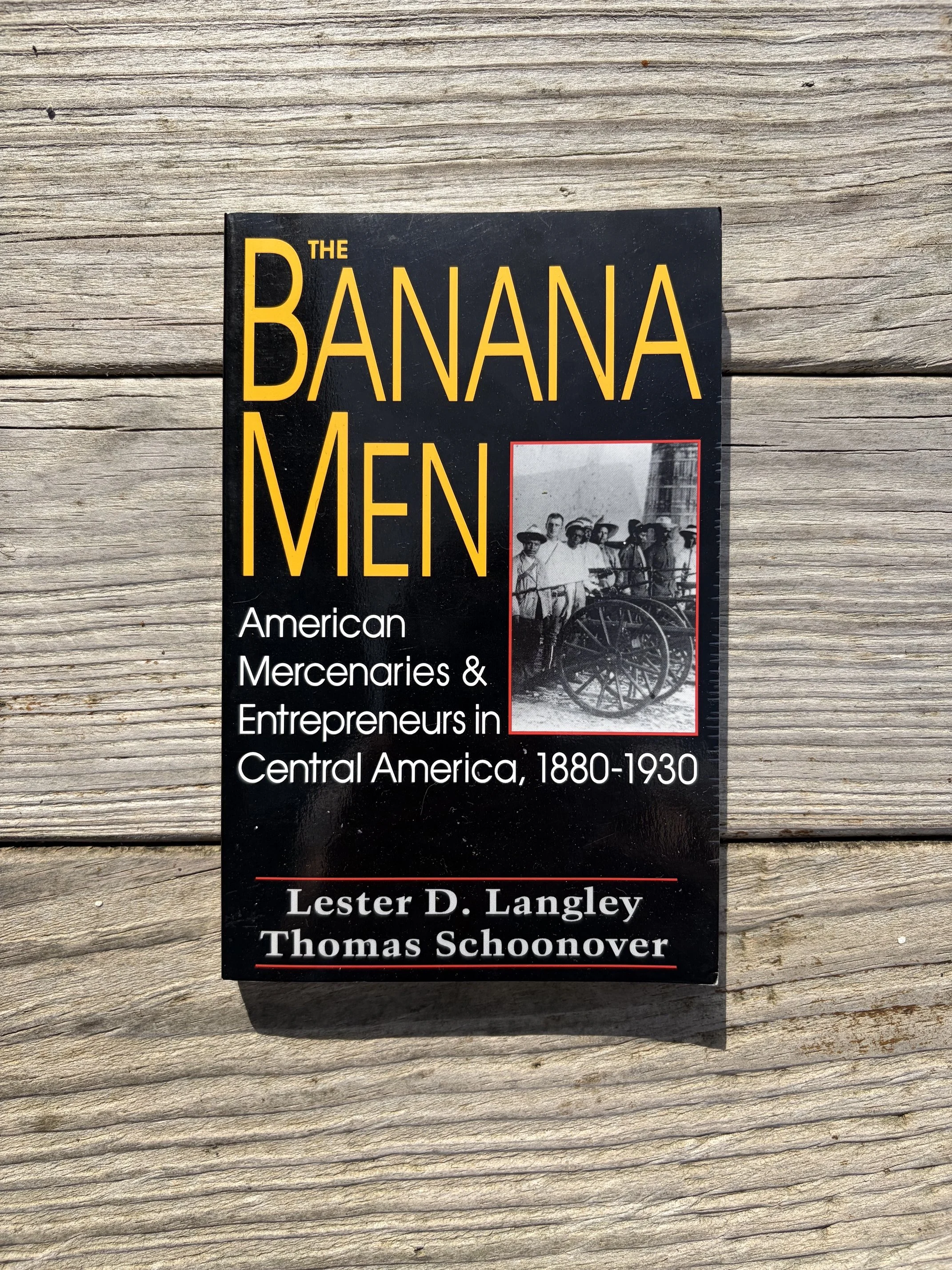
The Banana Men by Lester D. Langley and Thomas Schoonover
“Nineteenth-century liberals put their faith in capitalism, and capitalism required a vigorous export economy. A few lonely voices, especially in the agricultural sector, had begun saying this as early as the 1870s, but the country had always had an enthusiastic agro-export philosophy. Industrialists were more hesitant. After all, they had a grip on labor costs and, theoretically, could shut down production when the market was saturated. Government shielded their property from the destructive power of strikers, and when the vaunted middle class had to choose between its interests and the rights of all citizens to protest, it would choose the first. Sooner or later, however, the social disorders accompanying downturns and depressions would exact a price—not in the form of an uprising of the oppressed against the oppressors but in the gloomy realization that people needed work not only to survive but to participate in a market economy, however little, as producers and consumers. IN the protean political culture of the United States there would always be ambitious men or outspoken women to come along and persuade them to vote on the basis not of their conscience but of their situation. On the local level a generation of scoff laws and crooks made government ‘work’ by practicing what may be called a logical oxymoron, ‘honest corruption.’
“An expanded foreign market and cheaper raw materials for the nation’s manufacturers began to seem a godsend to those leaders whose public and private efforts had failed to reverse the recurring sharp economic downturns. As the Virginia gentry had learned in the eighteenth century, white indentures and black slaves living in similar economic despair could be a menace to the social structure. Poor whites could be made the social allies of the elites, however, if given a stake in the preservation of social order. The logic of an aggressive foreign economic policy became clear. An expanded domain for the U.S. economy in the world offered not only the prospect of cheaper raw materials and new markets but—just as valuable—a labor force that might be exploited in ways now increasingly risky at home. Unemployment and downturns in the domestic economy would remain problems, but such a policy would help to ease the domestic social tensions rising from internal disorder and instability. A later generation of socialist critics called such a policy ‘financial imperialism’ or ‘dollar diplomacy,’ but it deserved the designation of ‘social imperialism.’ Given the increased need to find profitable outlets for the agricultural surpluses of the Midwest and the industrial stockpiles of the Northeast, Latin America and particularly Central America offered the United States clear advantages for carrying out social imperialism.”
-Lester D. Langley and Thomas Schoonover